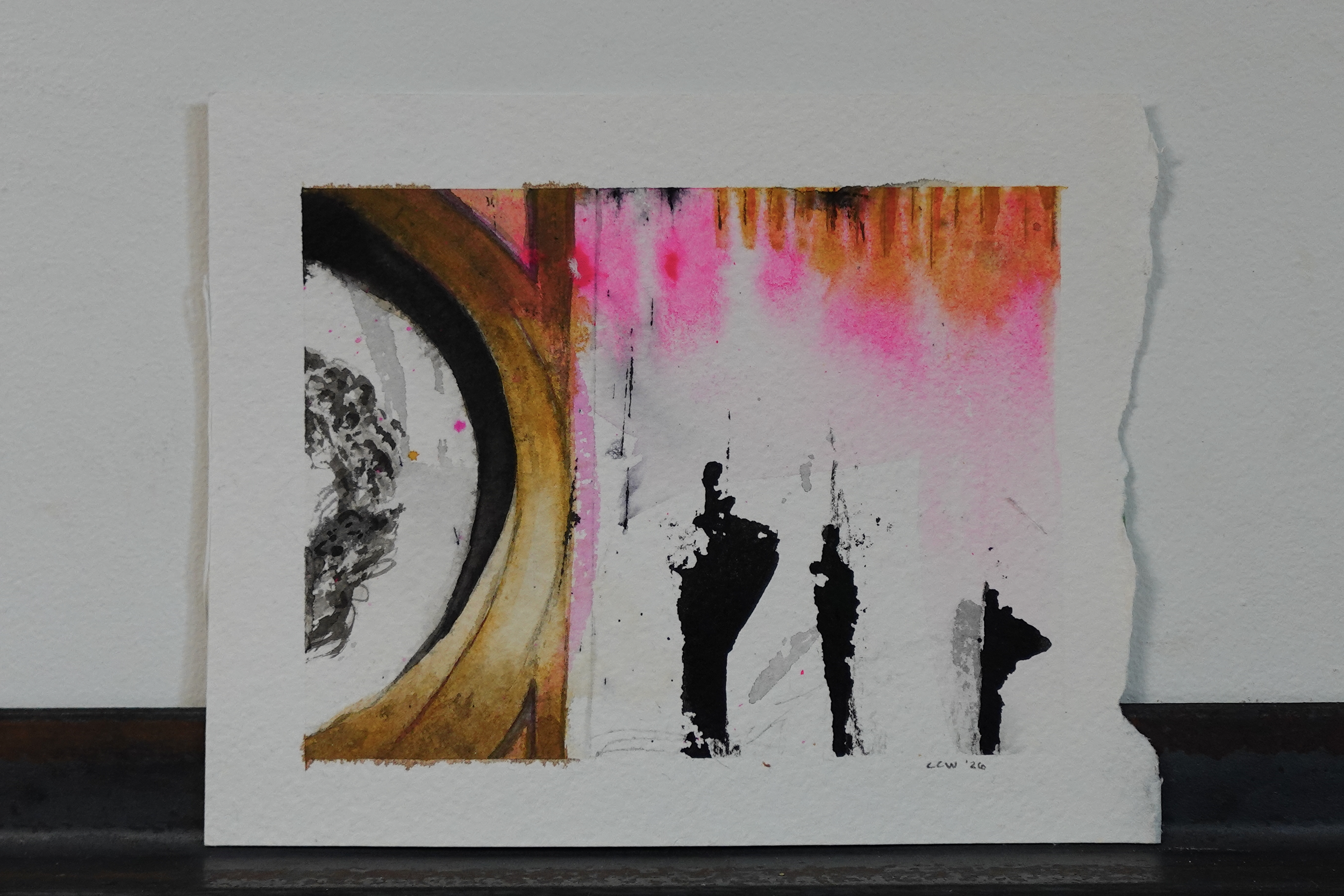
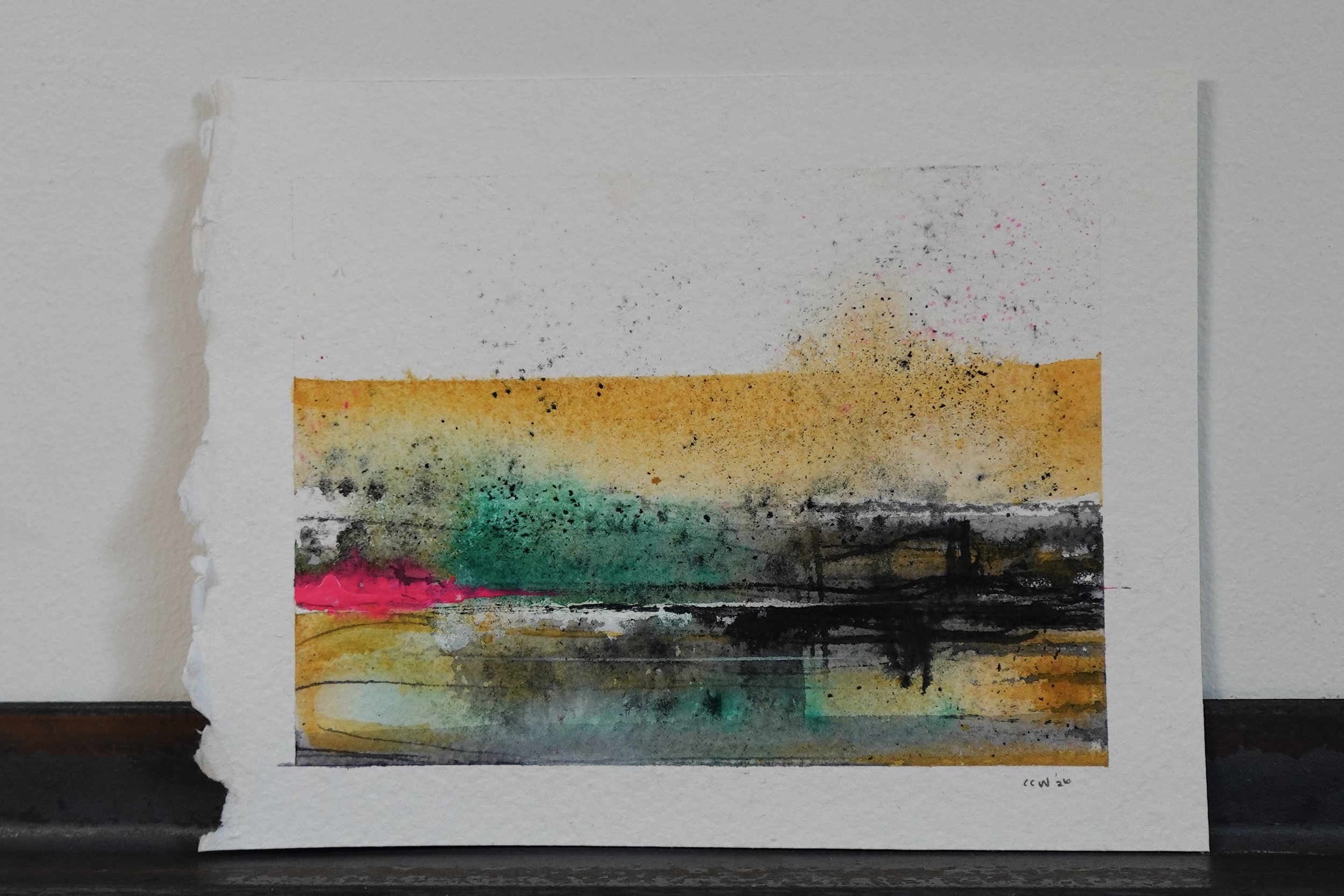
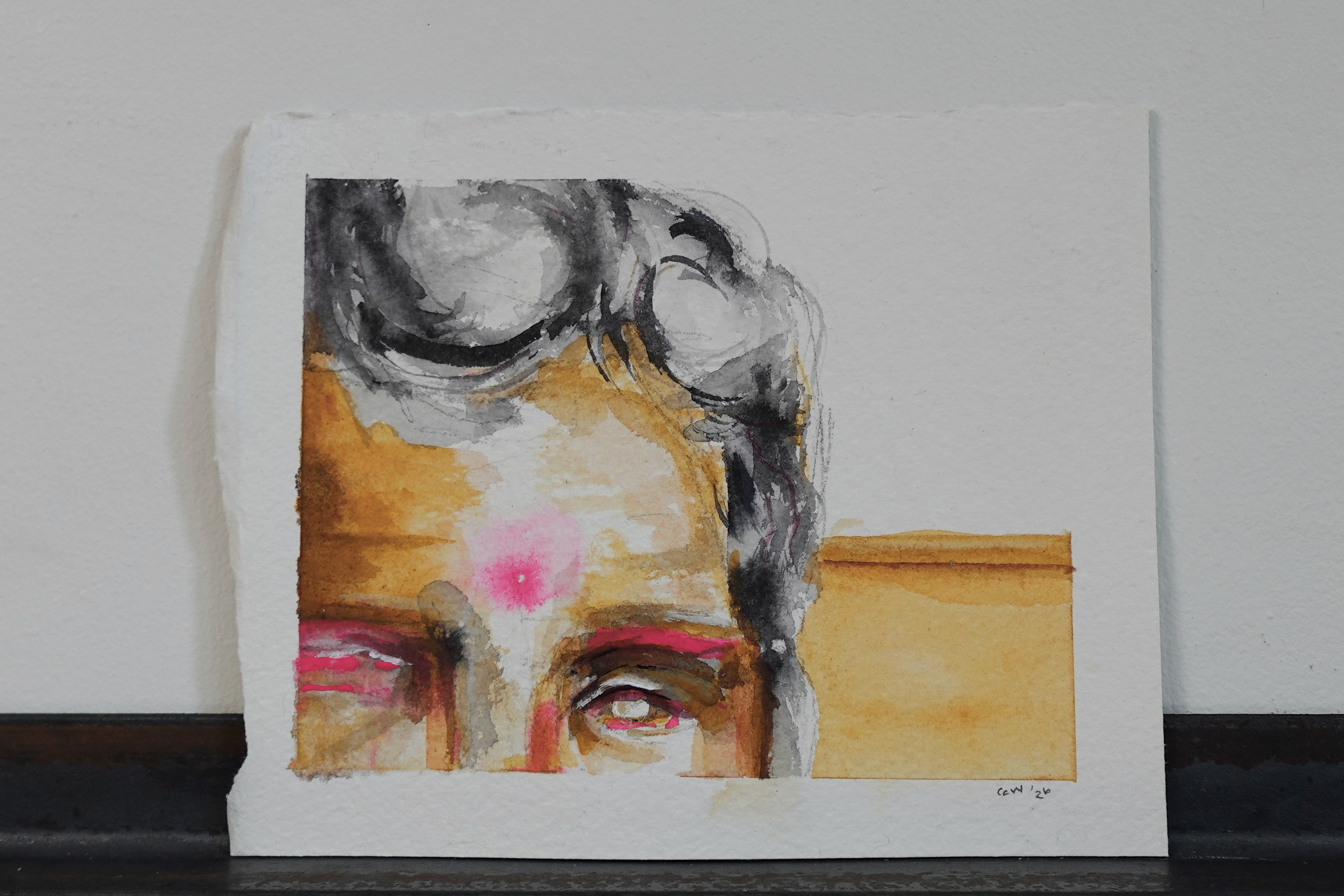
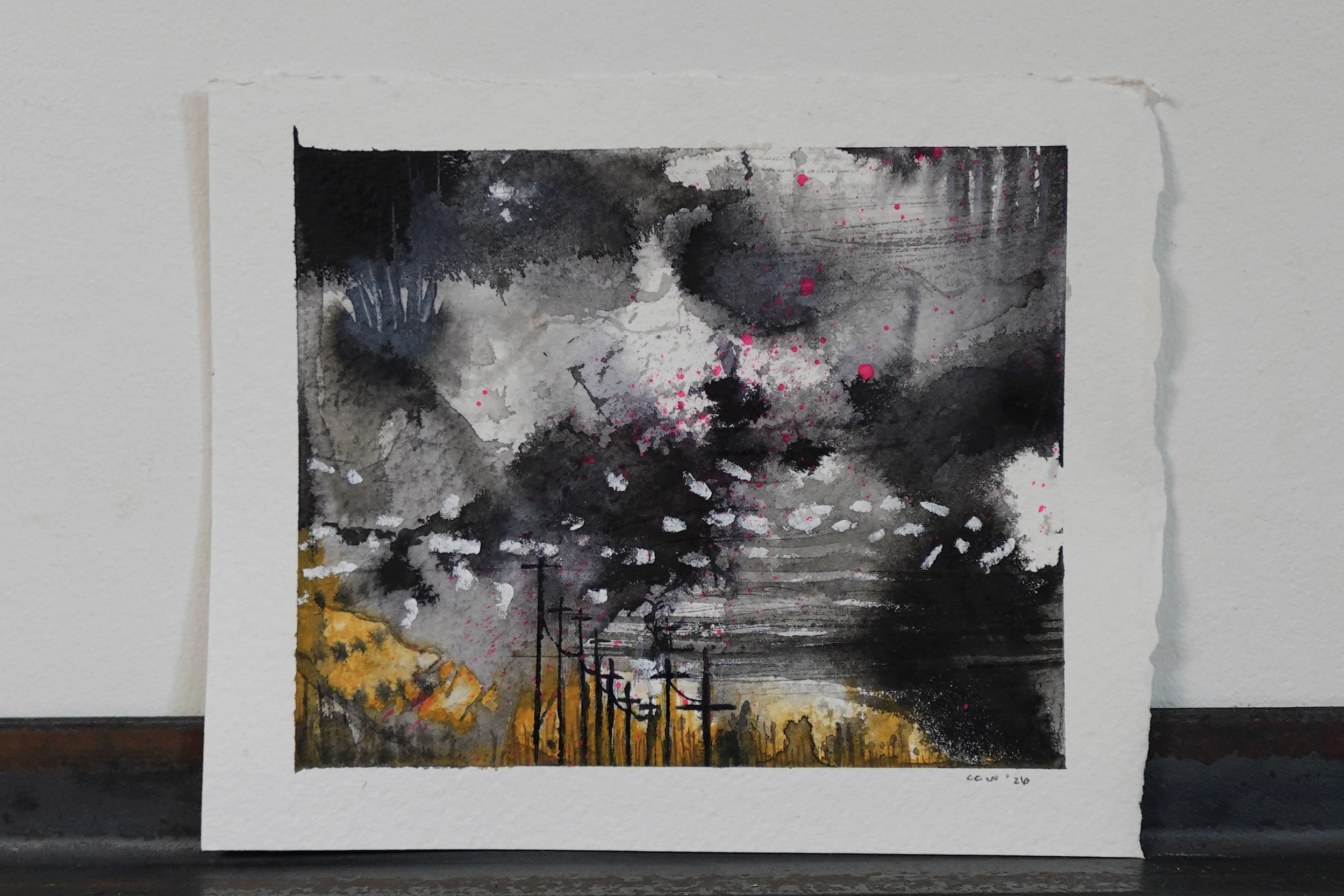
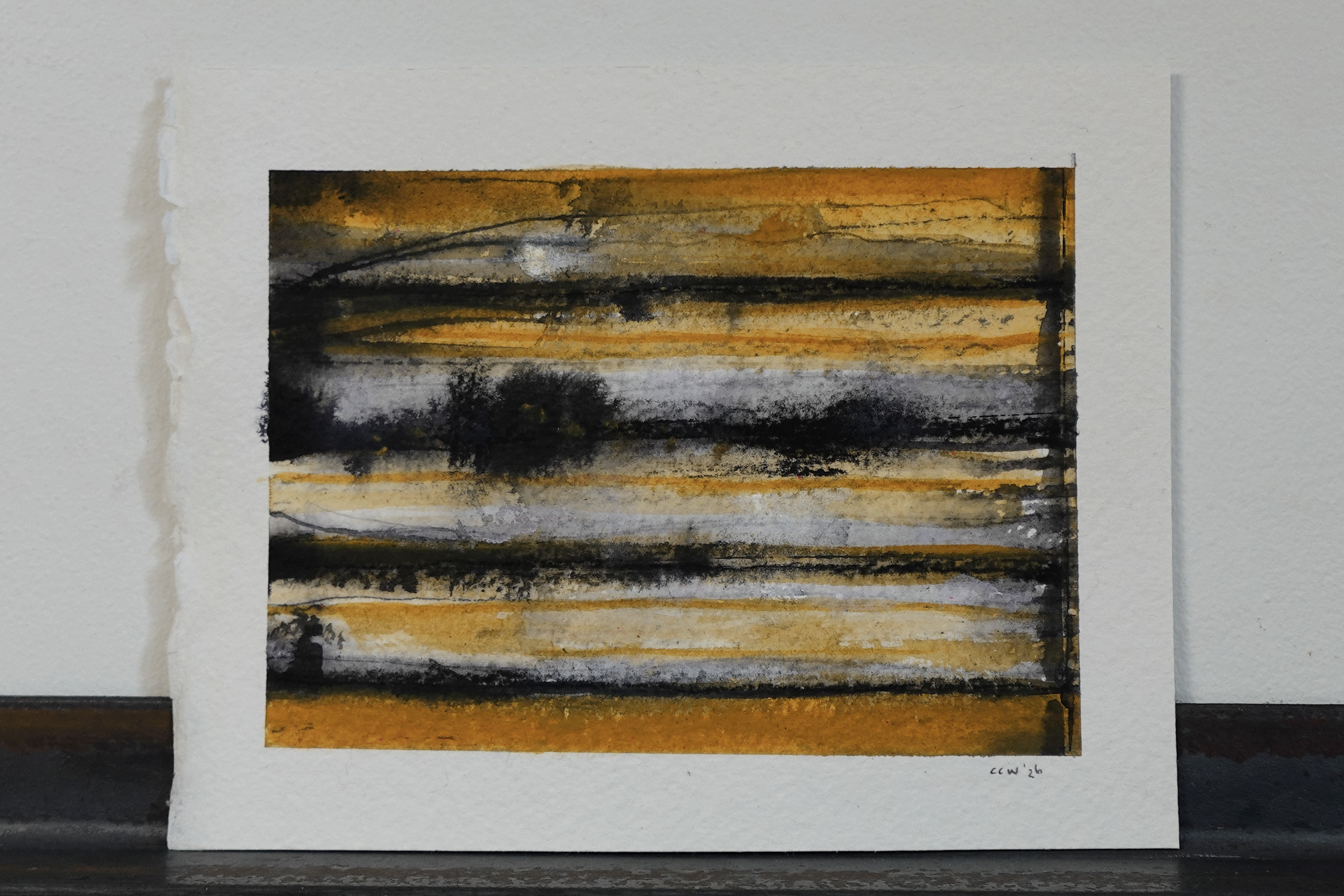
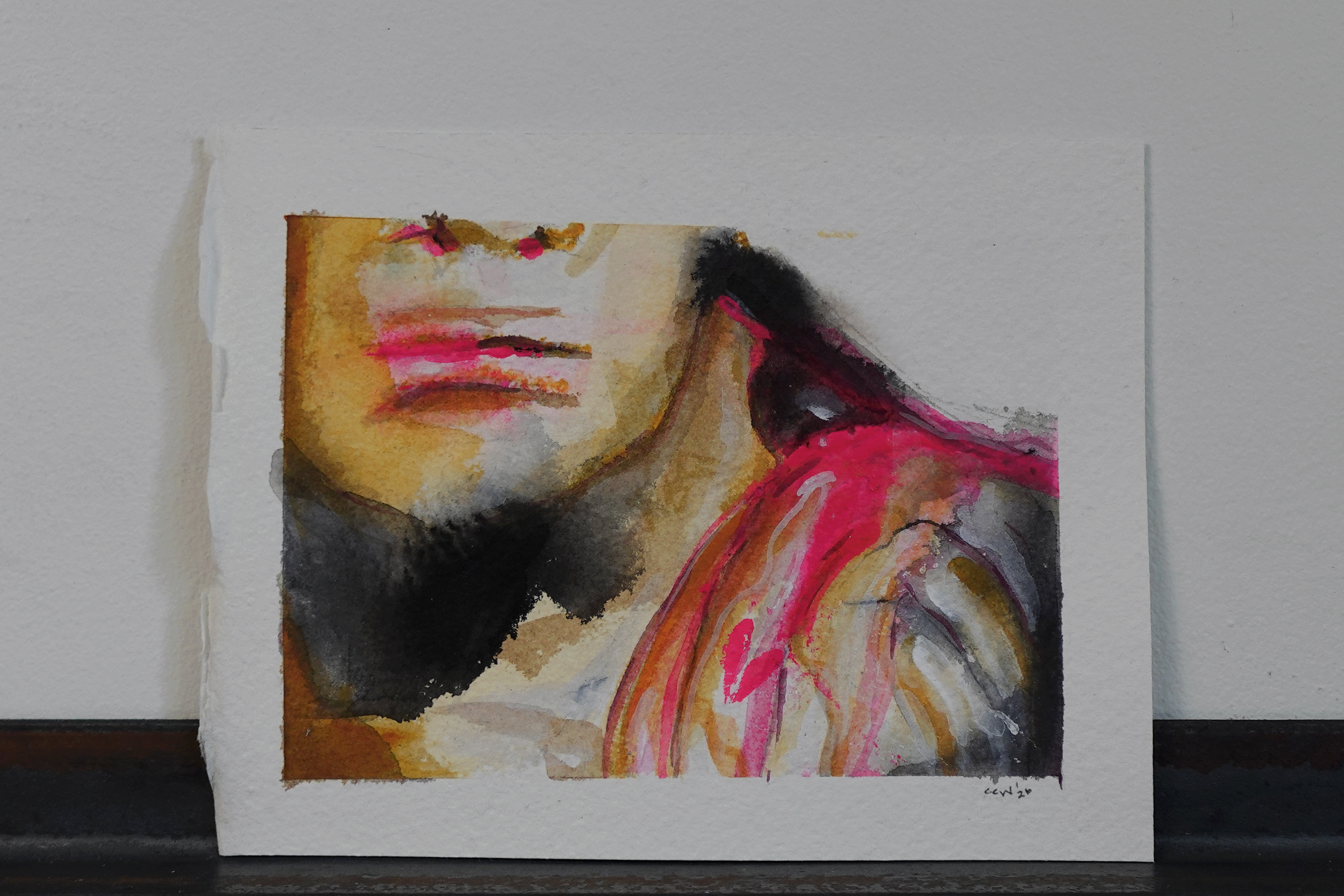
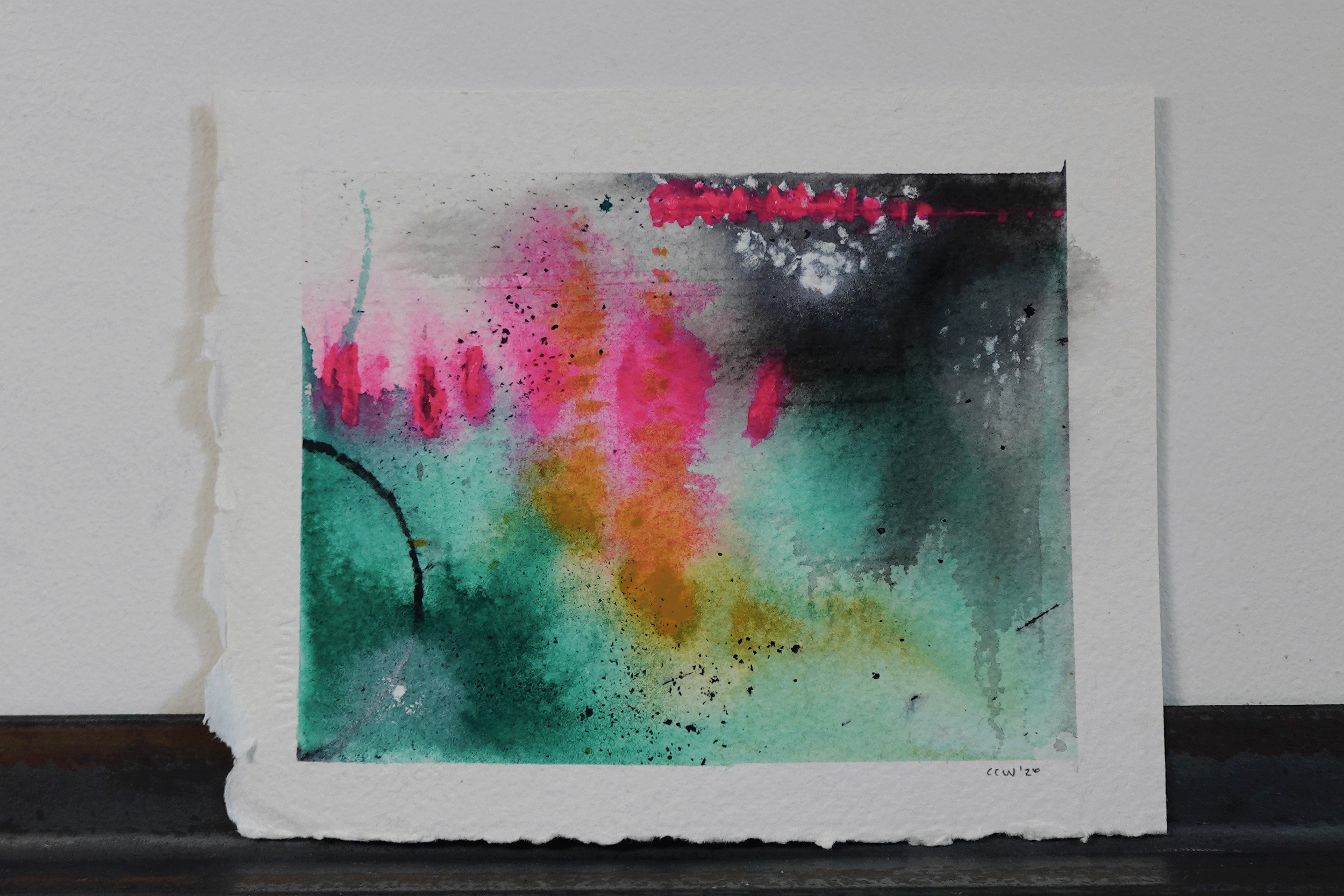
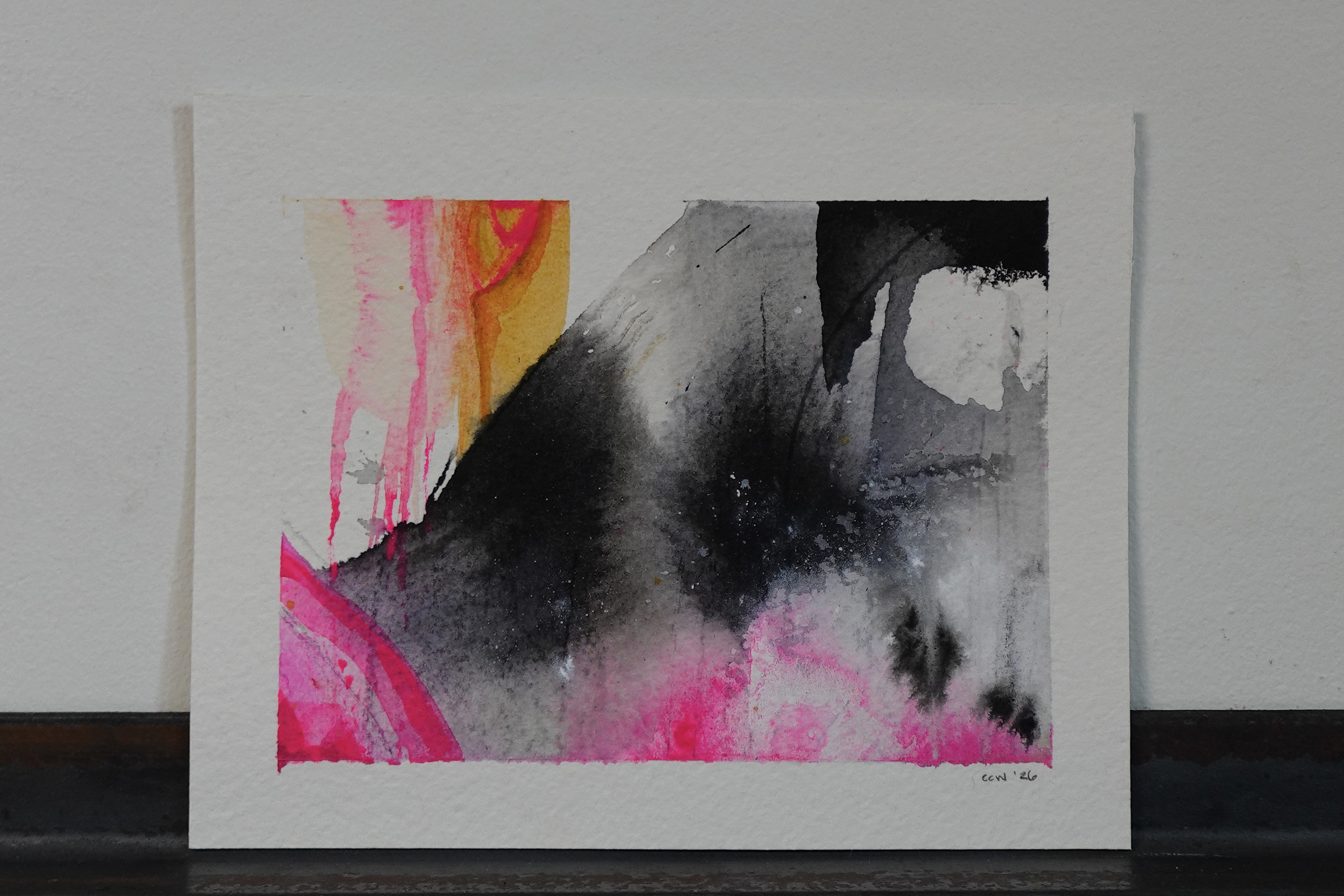
fascia
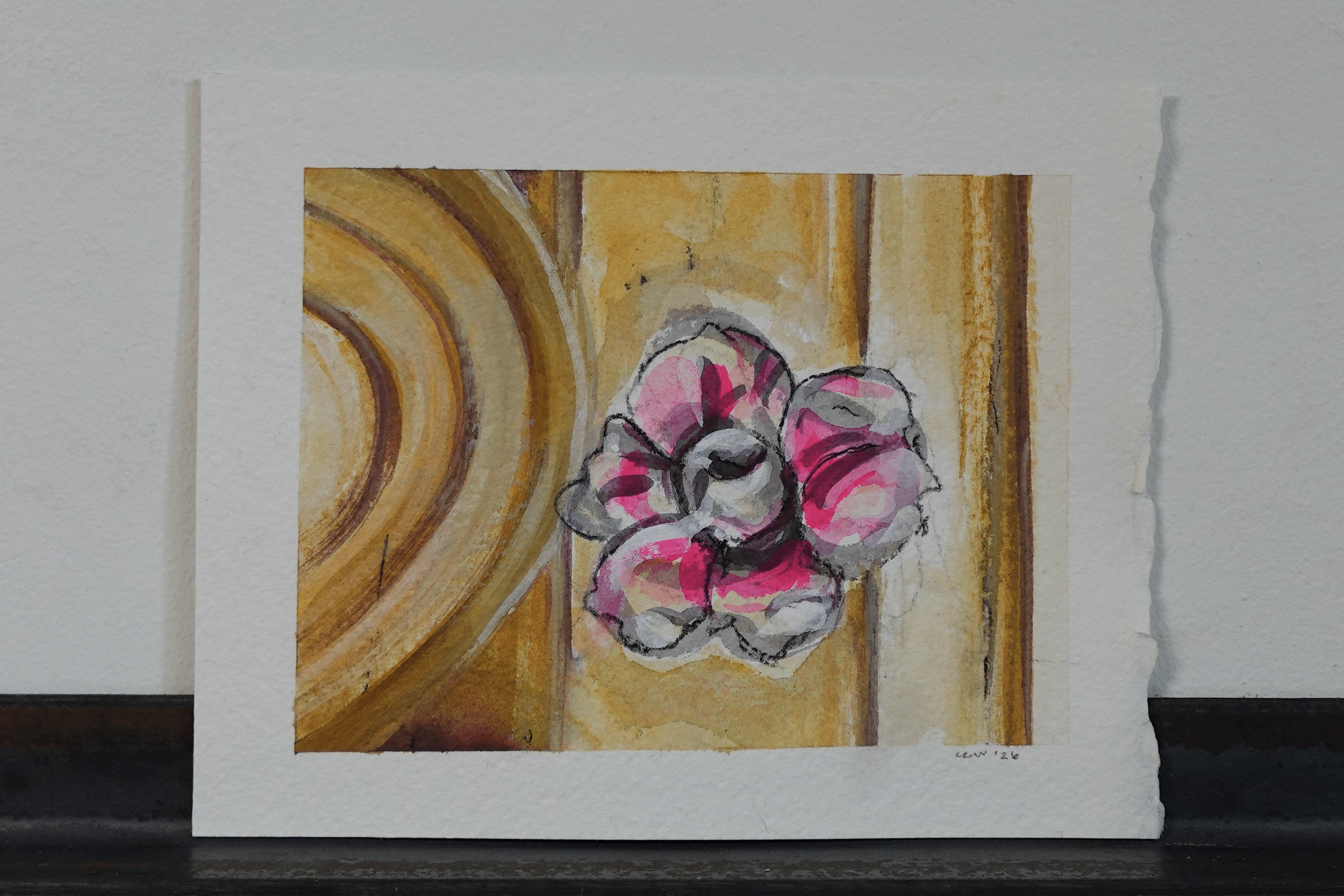
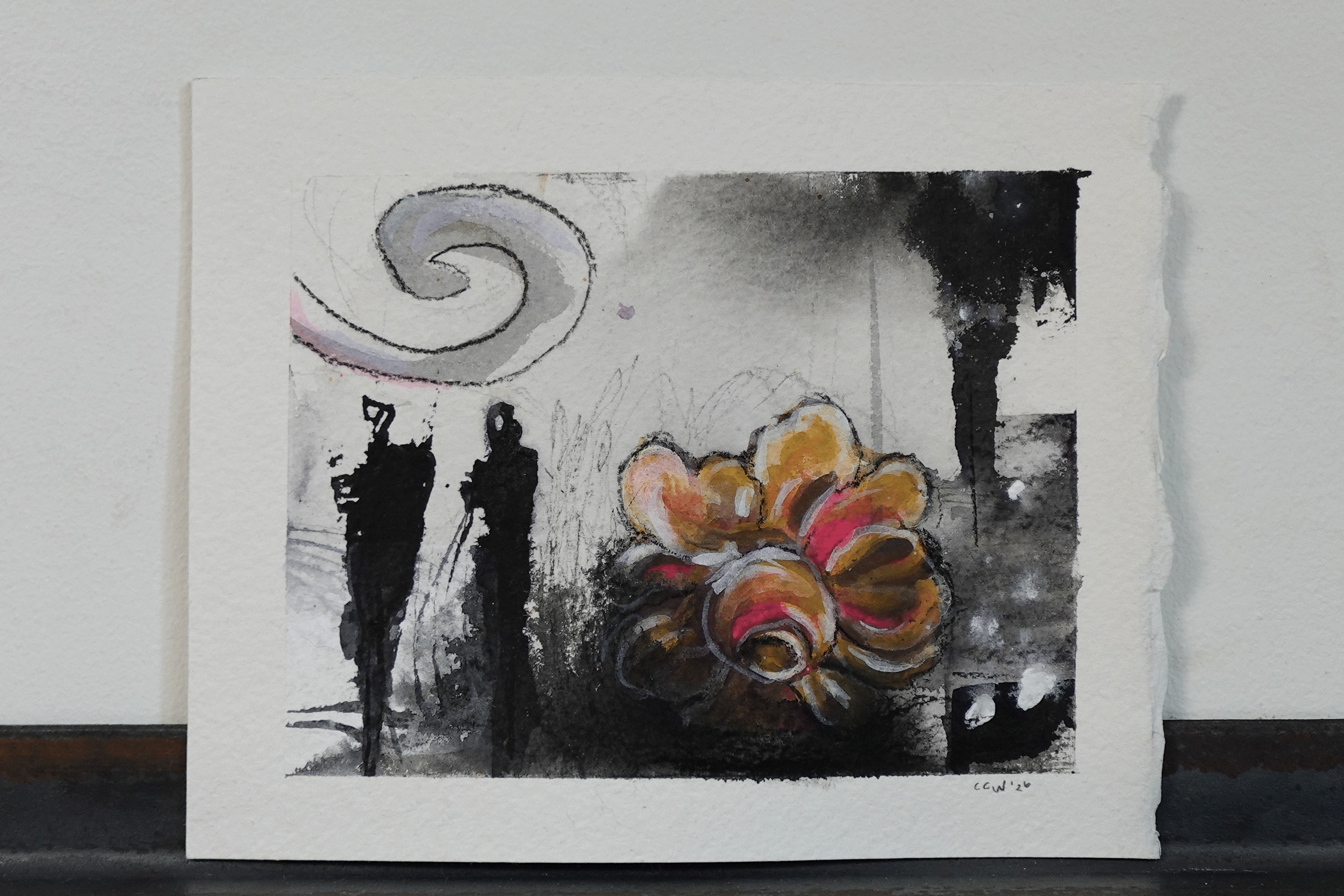
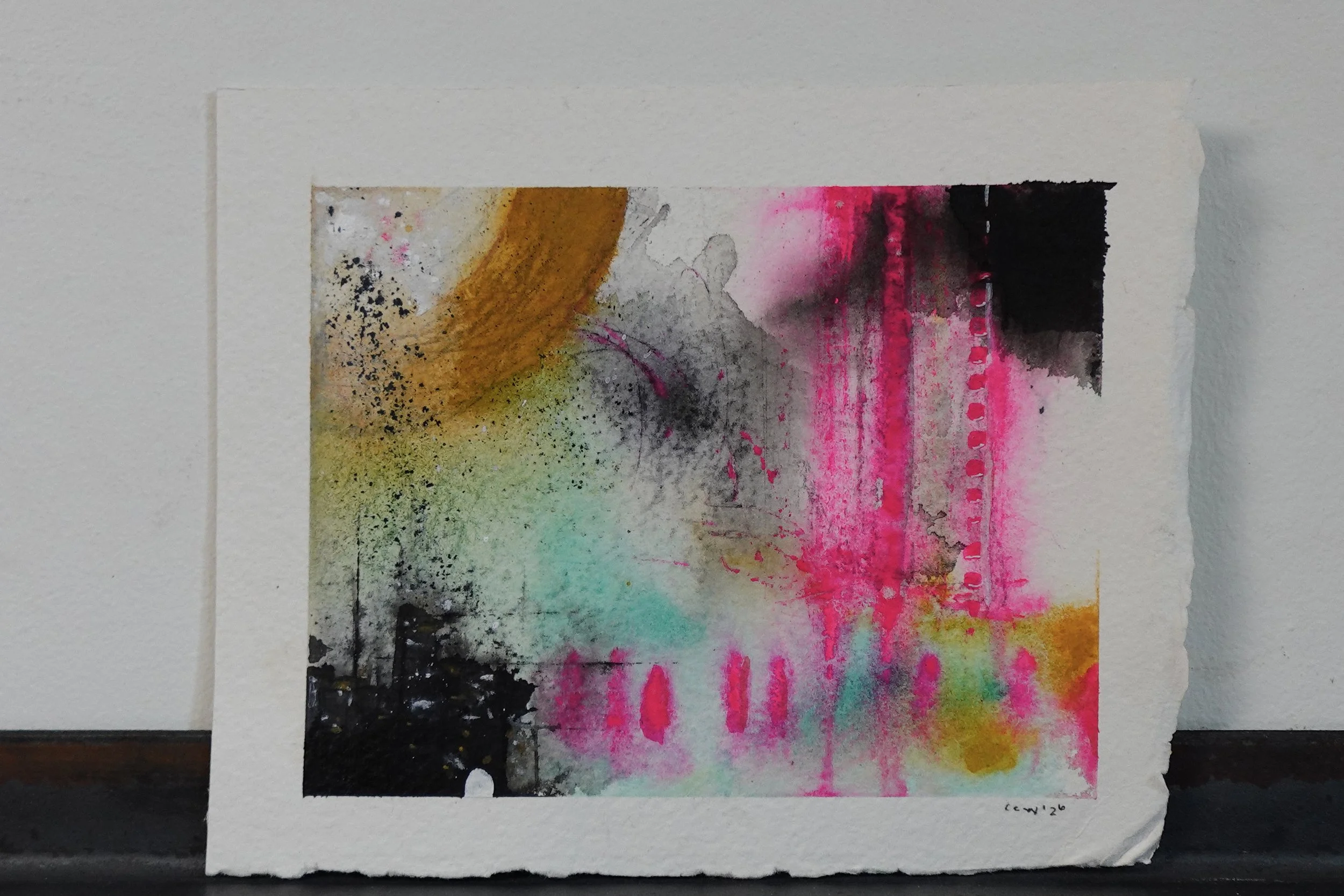
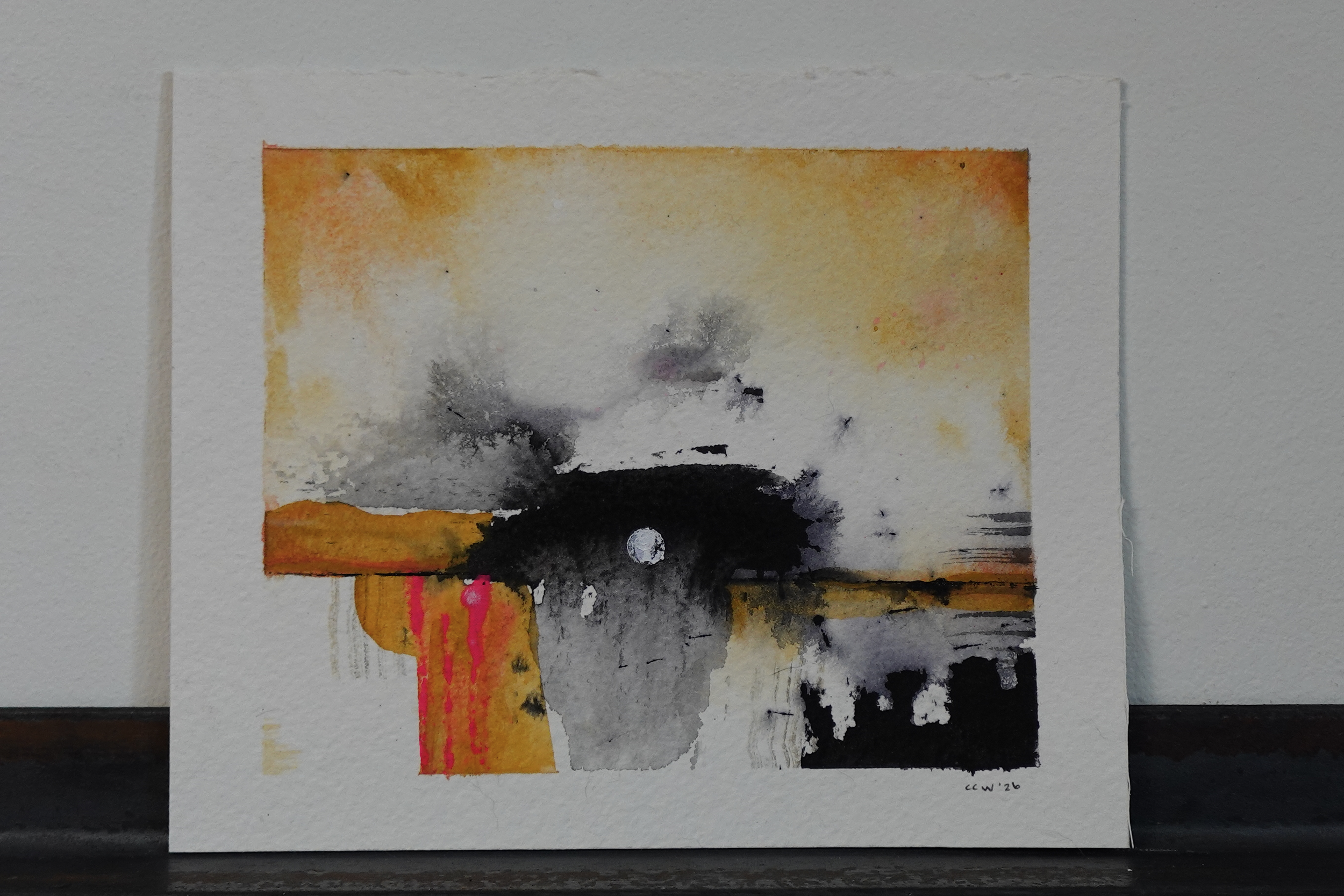
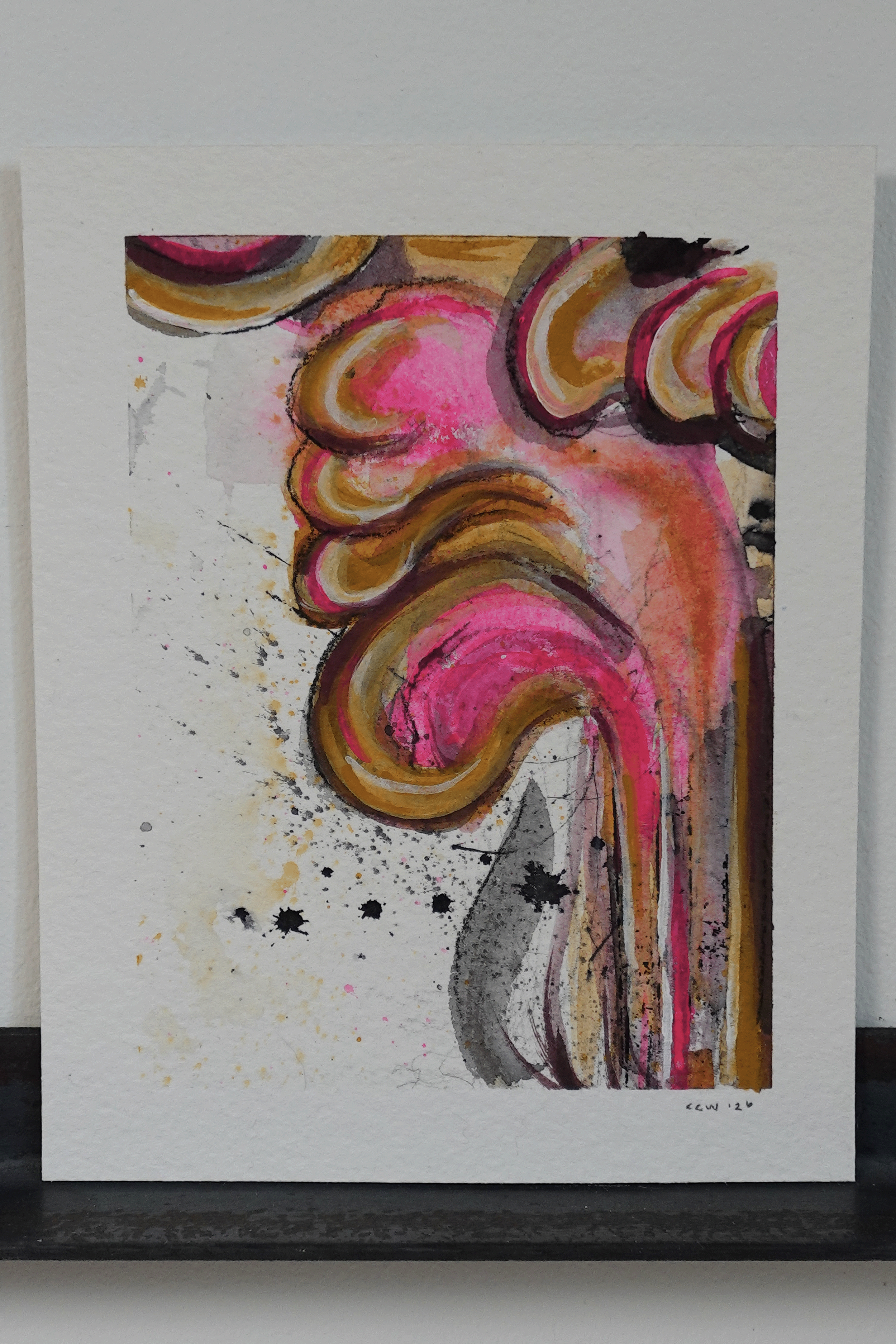
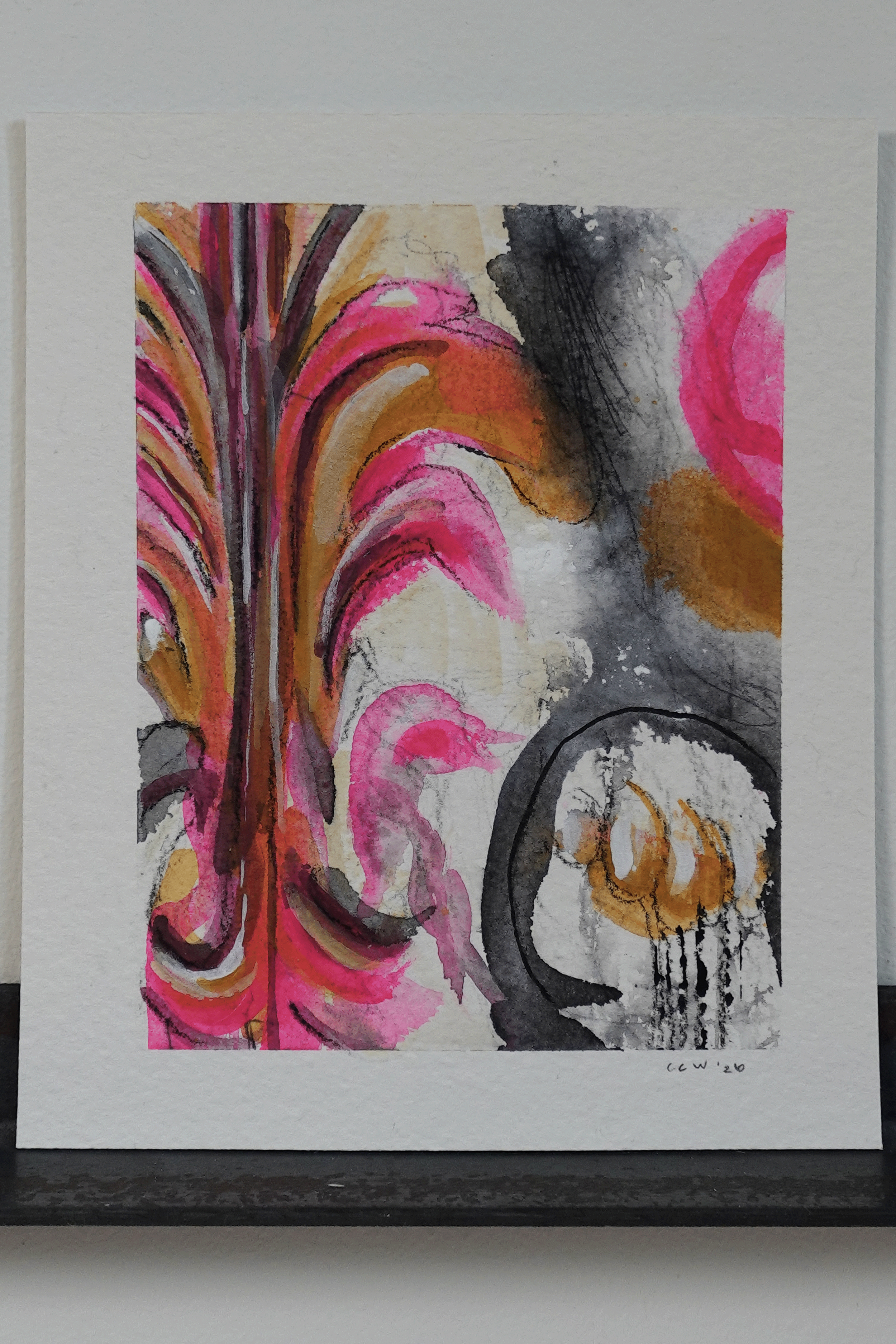
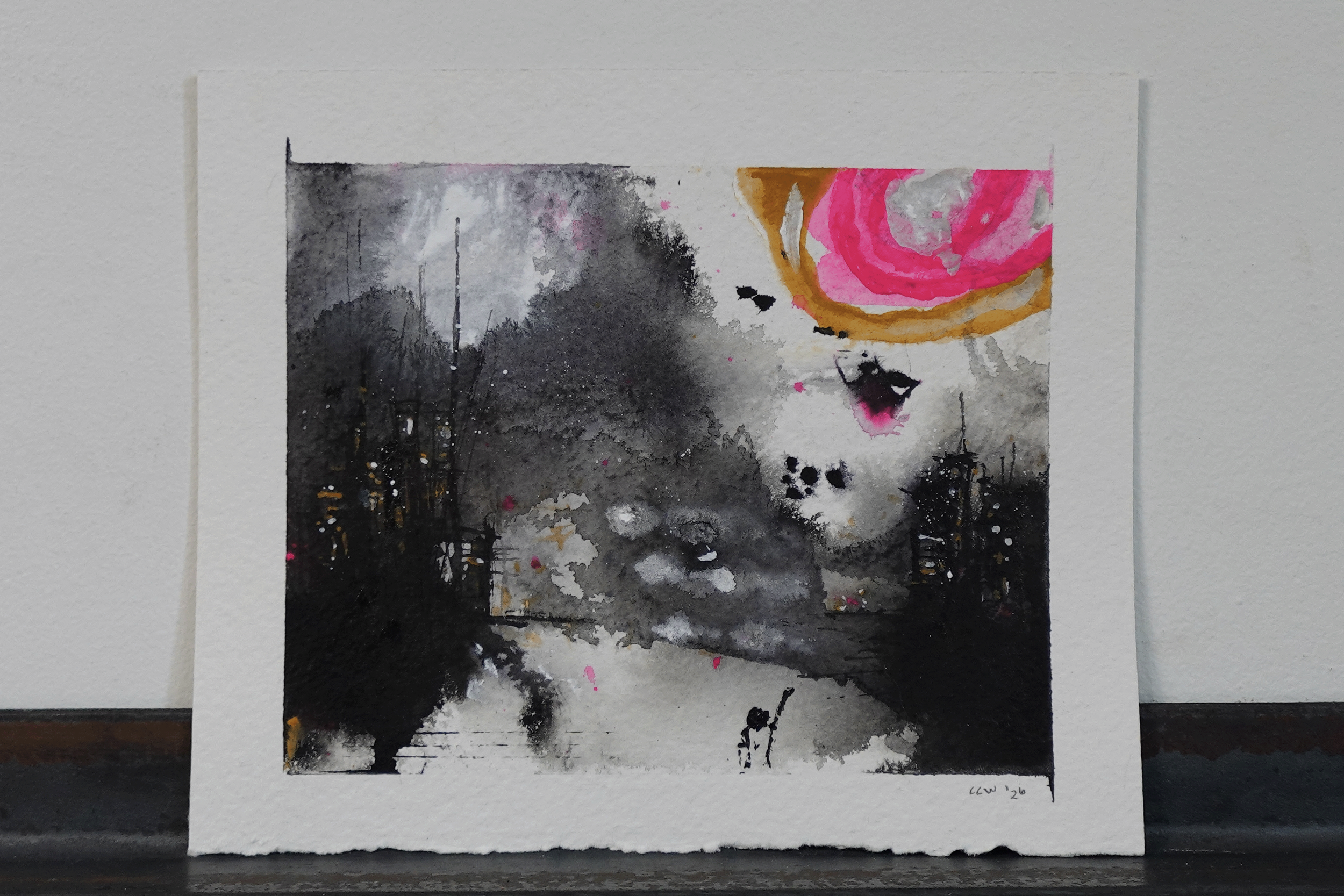
2026, Mixed media on 100% cotton, acid-free Stonehenge paper: watercolor, India ink, charcoal, acrylic, oil pastel. Each piece approx 6" x 7"
$111 unframed / $222 framed. Shipping calculated separately based on destination. Inquire and contact for purchase here.
Classical architecture meets surrealism meets abstraction meets a bad moon rising, trouble on the way. The marks I make often know what they’re doing before I do.
A mishmash of jumping-off points: archi, vintage National Geographic magazines, the absurd, a favorite shade of fluro rose and the deep gnarly current state of affairs. I thoroughly, truly, deeply loved working on this collection - it served as a wonderful vehicle for my multi-faceted, multi-functioning, eclectic eccentricity.
Boxes of vintage National Geographic magazines found at a local Habitat for Humanity ReStore have become a favorite source. For this series I spent time with pages ranging from 1940s photographs of Roman and Greek architecture to 1950s ballroom design and attire.
The Corinthian capital continues to appear in my reference material. Its acanthus leaves, fluted shaft and layered complexity. An example of ornament as load-bearing language. I keep returning to what classical architecture says about power, beauty, permanence and the hubris of civilizations that believed they would last forever. I also believe that without an understanding of the foundation of something, architecture included, one can only go so deep.
The classical period, while it is not the beginning of architecture (that goes back to the transition from caves to caves with "post and beam" structures extending off of them), is a key period to spend time with if one wants to really see and feel and understand the modern movement and what is considered temporary architecture.
I started with a large sheet of Stonehenge and divided it into 15 rectangular spaces. An architectural division of the picture plane as a first mark. Structure then detail, in art as in architecture. I love working on paper. Stonehenge specifically because it holds heavy water and multiple mediums without complaint.
Fascia: the connective tissue that binds together body structures. Elastic-y throughlines. High tensile strength. That which holds it all together.